
Did You Know?
Save time. Work smarter
Save time. Work smarter






The phrase tech giants envision future beyond smartphones is becoming increasingly relevant as leading technology companies invest in artificial intelligence, smart wearables, augmented reality, virtual reality, and ambient computing. For more than a decade, smartphones have dominated the digital world, but the next wave of innovation is already taking shape. Companies are now building technologies that reduce screen dependency and create more seamless, immersive, and intelligent user experiences.
As AI continues to evolve and connected ecosystems become smarter, the future of technology may no longer revolve around handheld devices alone. Instead, users could interact with digital systems through voice commands, smart glasses, wearable devices, and mixed reality environments.
Quick Answer
Tech giants envision future beyond smartphones by developing AI-powered devices, wearable technologies, smart glasses, mixed reality platforms, and connected ecosystems that allow users to interact with technology more naturally and efficiently without depending entirely on traditional smartphones.
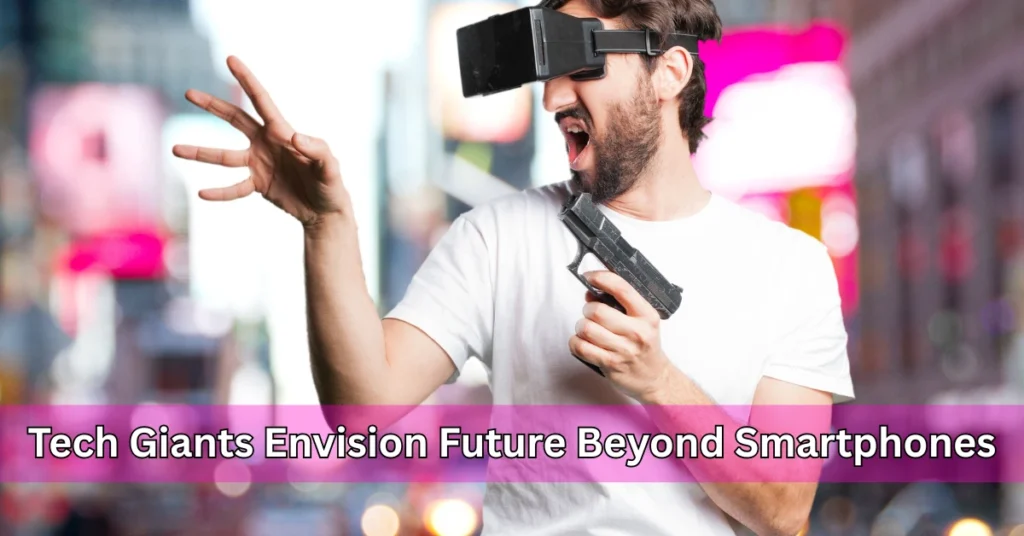
Tech giants envision future beyond smartphones because the smartphone industry has reached maturity, and users are demanding more advanced and immersive digital experiences. Companies are now focusing on technologies that can provide seamless interaction through artificial intelligence, wearable devices, and augmented reality.
The shift is driven by the need for innovation, better user engagement, and the growing capabilities of AI-powered systems.
| Reason | Explanation |
|---|---|
| Market Saturation | Most people already own smartphones |
| Slower Hardware Innovation | Annual upgrades bring limited changes |
| AI Growth | Artificial intelligence enables smarter interaction |
| Wearable Adoption | Consumers are using more wearable devices |
| Immersive Technology Demand | Users want interactive digital experiences |
Artificial intelligence is helping devices become more predictive, personalized, and conversational.
Smartwatches, smart rings, and AR glasses are creating alternatives to traditional screen interaction.
Technology is becoming less visible and more integrated into everyday life.
Artificial intelligence plays a major role in shaping future digital experiences. Instead of constantly using touchscreens, users may rely on voice assistants and AI-powered systems that understand context and behavior.
| AI Feature | User Benefit |
|---|---|
| Voice Commands | Hands-free interaction |
| Predictive Assistance | Faster task completion |
| Personalized Recommendations | Improved user experience |
| Automation | Reduced manual work |
Future assistants may manage schedules, communication, and productivity automatically.
AI systems can process data instantly and provide accurate recommendations.
Smart glasses are one of the strongest examples of future technology beyond smartphones. These devices can display digital information directly in front of users without requiring constant phone usage.
| Feature | Purpose |
|---|---|
| AR Navigation | Real-time directions |
| Live Translation | Instant communication support |
| AI Integration | Voice-controlled assistance |
| Notifications | Hands-free updates |
Users can access information without constantly looking down at screens.
Professionals may use smart glasses for remote work, navigation, and collaboration.
Virtual reality and mixed reality technologies are becoming more advanced and accessible. These systems create immersive digital environments for work, entertainment, and education.
Teams can collaborate in immersive digital offices.
Gamers can experience fully immersive worlds.
Students may learn through simulations and virtual experiences.
Wearables are evolving beyond fitness tracking and basic notifications. Modern wearable devices are integrating AI, health monitoring, and communication features.
| Device Type | Main Function |
|---|---|
| Smartwatches | Communication and health tracking |
| Smart Rings | Sleep and wellness monitoring |
| AI Pins | Voice-controlled assistance |
| AR Glasses | Augmented reality experiences |
Devices can track heart rate, sleep patterns, and activity levels in real time.
Users can interact with technology without holding a device.
The Internet of Things connects devices, appliances, and systems through the internet to create smarter environments.
| Area | Example |
|---|---|
| Smart Homes | Automated lighting and security |
| Smart Vehicles | AI-powered navigation |
| Smart Offices | Connected workplace systems |
Devices can work together automatically to improve efficiency.
Users can control systems through voice commands and sensors instead of apps.
Brain-computer interfaces represent one of the most futuristic developments in technology. Researchers are exploring ways to control digital systems using brain signals.
| Technology Use | Potential Impact |
|---|---|
| Device Control | Operate systems mentally |
| Medical Support | Help people with disabilities |
| Faster Communication | Reduce physical interaction |
Although still developing, this technology supports the idea that digital interaction will eventually move beyond smartphones.
While innovation is progressing rapidly, several obstacles remain before smartphones lose dominance.
AI systems and connected devices collect large amounts of personal data.
Advanced wearables and mixed reality devices remain expensive.
Portable devices require long-lasting and efficient batteries.
People may take time to change long-established smartphone habits.
Many sectors are expected to grow as next-generation technologies become mainstream.
| Industry | Expected Benefit |
|---|---|
| Healthcare | Advanced patient monitoring |
| Education | Immersive learning environments |
| Retail | Enhanced shopping experiences |
| Gaming | Interactive entertainment |
| Transportation | Smarter navigation systems |
Future technology may focus on invisible computing experiences where devices work naturally around users.
People may rely more on speech instead of typing.
Digital systems could respond to physical movements.
Personal AI assistants may become deeply integrated into everyday life.
Tech giants envision future beyond smartphones as a world powered by artificial intelligence, wearable devices, mixed reality, and connected ecosystems. The technology industry is gradually moving toward more immersive, intelligent, and seamless digital experiences that reduce dependence on traditional handheld screens.
Although smartphones will continue to play an important role for years, innovation is clearly shifting toward smarter interaction methods such as voice control, smart glasses, AI assistants, and ambient computing. As these technologies improve and become more affordable, the future of digital communication and computing may look completely different from today’s smartphone-driven world.
Tech companies are searching for new innovation opportunities because smartphones have reached market maturity and users want smarter and more immersive experiences.
Smart glasses, wearable AI devices, mixed reality headsets, and brain-computer interfaces are potential alternatives to smartphones.
Artificial intelligence improves automation, voice interaction, personalization, and smart decision-making across connected devices.
Smartphones are unlikely to disappear soon, but future technologies may gradually reduce their importance over time.
Healthcare, education, gaming, retail, and transportation industries are expected to benefit significantly from post-smartphone innovations.





Leave a Comment